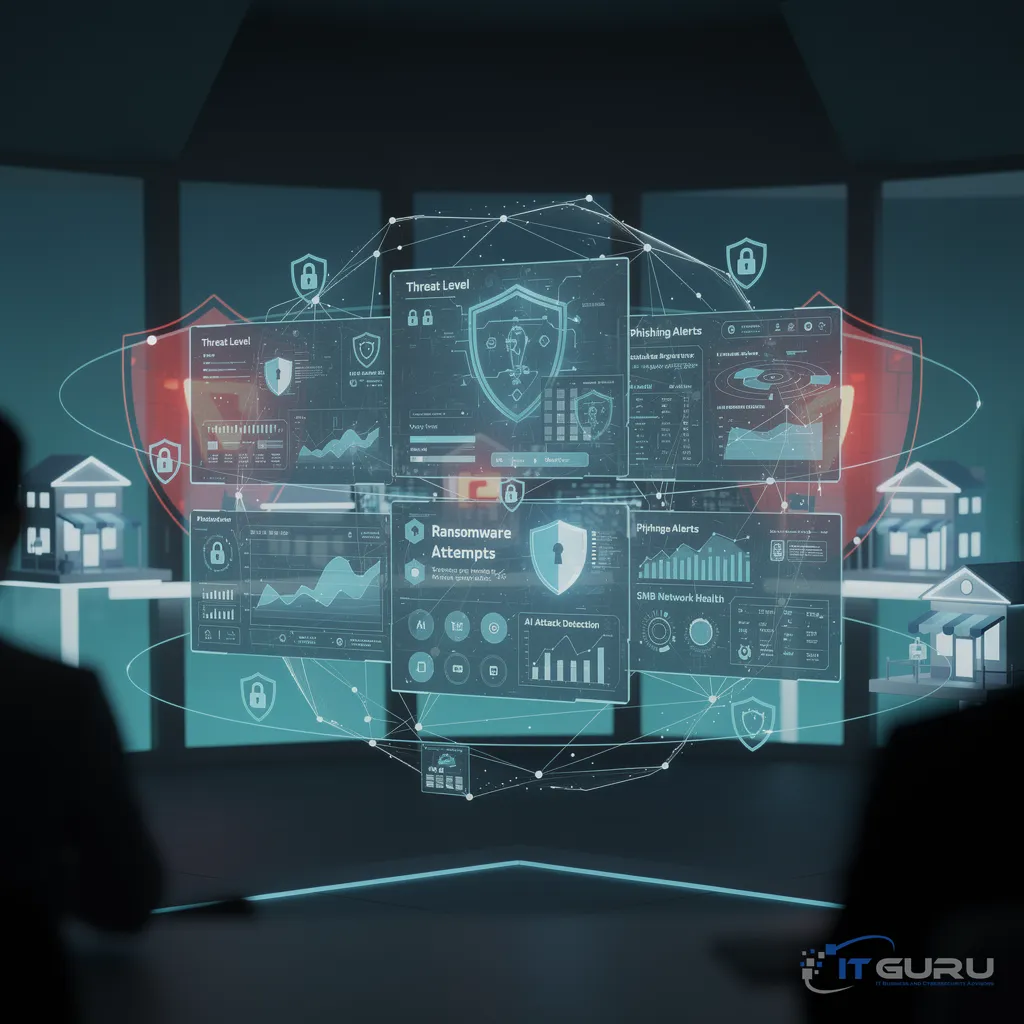
Ransomware, phishing schemes, and AI-powered scams top the list of active dangers facing small
Emerging threats like ransomware, phishing, and DDoS attacks increasingly target small and medium businesses, according to CrowdStrike’s 2025 State of SMB Cybersecurity Report, which found 93% of SMBs recognize the risk yet remain underprepared. ITGuru Canada Inc. addresses these gaps through Managed Firewall, Endpoint Protection, and Vulnerability Scanning built on Zero Trust principles.
Key Takeaways
-
SMBs face escalating cyber threats including data breaches, malware, DDoS, and phishing attacks that disrupt operations and compromise sensitive business data.
-
93% of SMBs recognize cyber risk, yet limited investment in advanced protection technologies leaves organizations critically exposed to attacks.
-
Cyberattacks impact SMBs disproportionately harder than larger enterprises due to fewer resources and less sophisticated security infrastructure in place.
-
Zero Trust security principles and managed endpoint protection detect threats proactively, reducing breach risk and keeping your business productive.
What Emerging Threats Are Targeting SMBs Now?
Ransomware, phishing schemes, and AI-powered scams top the list of active dangers facing small and medium businesses today. Nearly half of all cyber breaches now hit SMBs directly, threatening daily operations and customer trust in the process. A single incident can halt invoicing, lock out staff, and drive clients toward competitors who look more secure.
The threat landscape has grown more complicated as attackers target the vendors. IT service providers that small businesses depend on. Supply-chain attacks let criminals compromise one provider and reach dozens of downstream clients at once. This shift matters because a business doesn’t need to be careless to get hit. A trusted partner’s weak link can be enough.
Are Small Businesses Actually Prepared for These Attacks?
Awareness runs high, but readiness lags badly behind it. Most SMBs describe themselves as knowledgeable about cybersecurity threats and claim to have a response plan on paper. Far fewer back that confidence with real investment: many skip new security tools altogether, and adoption of AI-powered defenses remains rare across the sector.
That gap between confidence and preparation defines current ransomware trends — attackers exploit outdated tools faster than businesses replace them. ITGuru Canada Inc operates as a managed IT. Cybersecurity provider built to close that gap, keeping client defenses aligned with how threats actually evolve rather than how they looked a year ago.
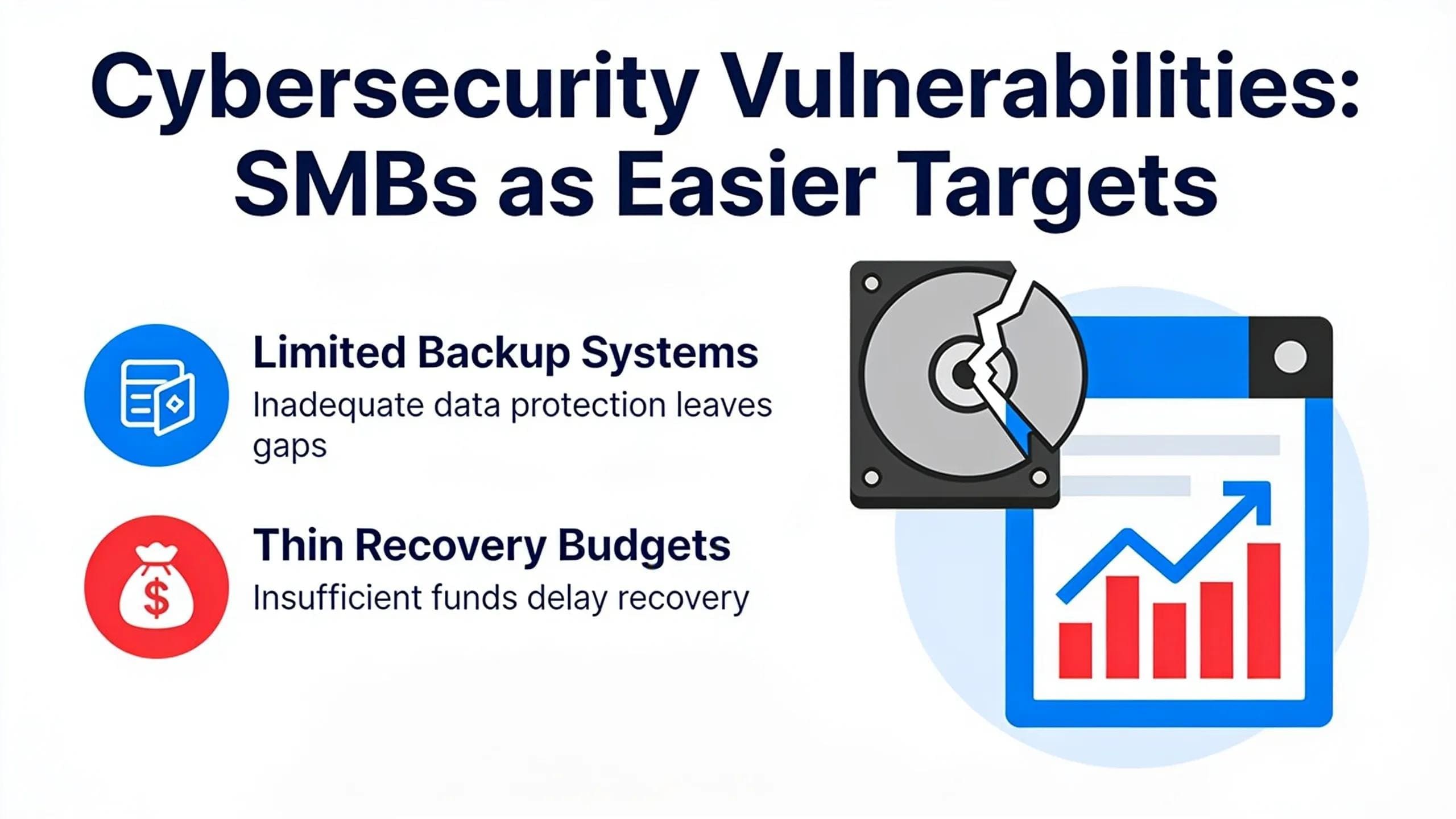
Limited backup systems and thin recovery budgets make small and medium businesses easier targets than
Why Are SMBs Prime Targets For Attackers?
Limited backup systems and thin recovery budgets make small and medium businesses easier targets than large enterprises. Attackers know that a smaller company often lacks the redundant servers, dedicated recovery staff, and mitigation tools that bigger organizations keep on hand. When an incident hits, that gap turns a manageable disruption into a business-threatening event. Recovery stretches from days into weeks, and customer trust erodes along the way.
This vulnerability sits inside a broader threat landscape where automated attacks scan for the weakest entry point, not the biggest prize. Small operations frequently rank as easier wins simply because their defenses lag behind their exposure.
What Makes Small Businesses Easier Targets Than Large Enterprises?
Scale works against smaller companies here. Large enterprises spread risk across dedicated security teams, layered backups, and tested response plans. A growing SMB often runs lean, with one IT contact juggling security alongside daily operations, leaving fewer resources to catch and contain cybersecurity threats before damage spreads.
How Does ITGuru Canada Inc Help Close That Gap?
ITGuru Canada Inc brings more than two decades of experience helping organizations strengthen resilience. Align technology decisions with business goals. The company builds its protection around a security-first, Zero Trust framework, backed by extensive Microsoft certifications. Clients receive:
-
Proactive monitoring around the clock
-
Enterprise-grade protection tailored to SMB budgets
-
Clear, ongoing communication from a qualified team
That structure helps smaller organizations compete on security terms once reserved for larger enterprises.
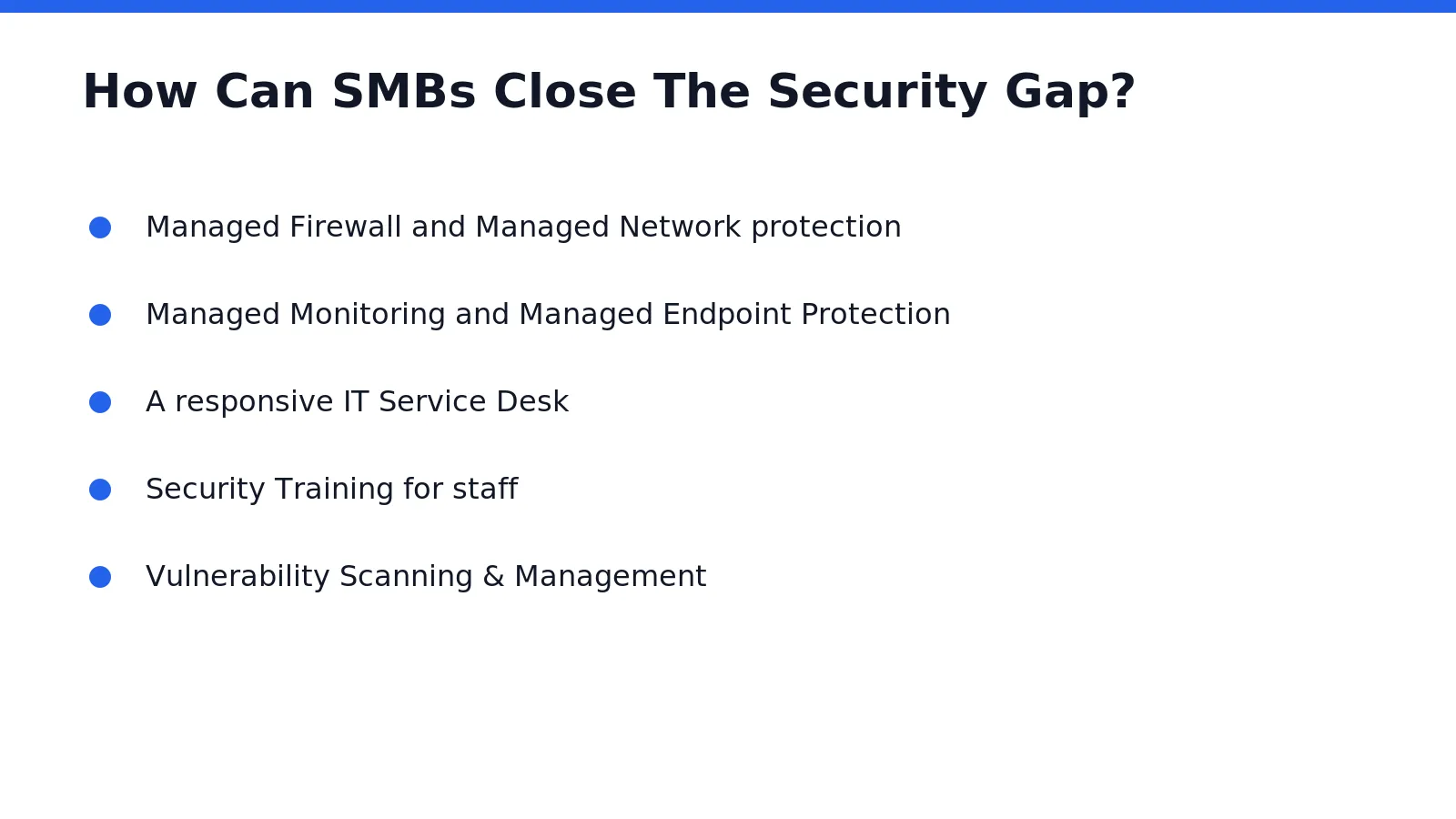
How Can SMBs Close The Security Gap?
Closing the security gap starts with structure, not more software. Six core pillars anchor an effective defense: governance, asset identification, protection controls, threat detection, incident response, and recovery planning. Skipping any one of these leaves a blind spot that cybersecurity threats can exploit, often before an organization notices the intrusion.
ITGuru Canada Inc builds its managed services around that same framework. Rather than bolting on isolated tools, the company delivers end-to-end managed IT and security powered by Microsoft Azure and Microsoft 365 expertise, Zero Trust principles, and round-the-clock support. That structure gives growing organizations enterprise-grade protection without an enterprise-sized budget.
What services actually close the gap?
Coverage needs to span prevention, detection, and response together. ITGuru Canada Inc’s catalog includes:
-
Managed Firewall and Managed Network protection
-
Managed Monitoring and Managed Endpoint Protection
-
A responsive IT Service Desk
-
Security Training for staff
-
Vulnerability Scanning & Management
Each service maps directly to one of the six pillars, so nothing operates in isolation.
Does closing the gap mean overspending?
No — the goal is smarter allocation, not bigger budgets. ITGuru Canada Inc helps clients secure both on-premises and cloud environments while improving uptime and reducing risk. As the threat landscape shifts and ransomware trends grow more automated, that balance between protection and cost becomes the deciding factor for SMB resilience.
FAQ
What are the biggest emerging cyber threats facing SMBs today?
Ransomware, phishing schemes, AI-powered scams, and supply-chain attacks top the list. Attackers increasingly target IT vendors and service providers to reach multiple downstream small business clients through a single compromise.
Why do SMBs struggle to defend against these threats?
Awareness outpaces action: most SMBs claim to understand risks and have response plans. Many skip new security tools and rarely adopt AI-powered defenses, leaving outdated systems exposed.
How does ITGuru Canada help SMBs close these security gaps?
ITGuru Canada delivers Managed Firewall, Endpoint Protection, and Vulnerability Scanning built on Zero Trust principles, aligning client defenses with how threats actually evolve rather than outdated approaches.
Conclusion
In closing, emerging cyber threats demand that small and medium businesses move beyond reactive defense to adopt a security-first mindset grounded in modern principles and continuous vigilance. Organizations that combine proactive monitoring, employee training, and enterprise-grade protection—while aligning security investments with business outcomes—build genuine resilience against evolving attacks. The path forward requires partnership with experienced advisors who understand both technology and your operational reality, ensuring your defenses strengthen as threats evolve.